
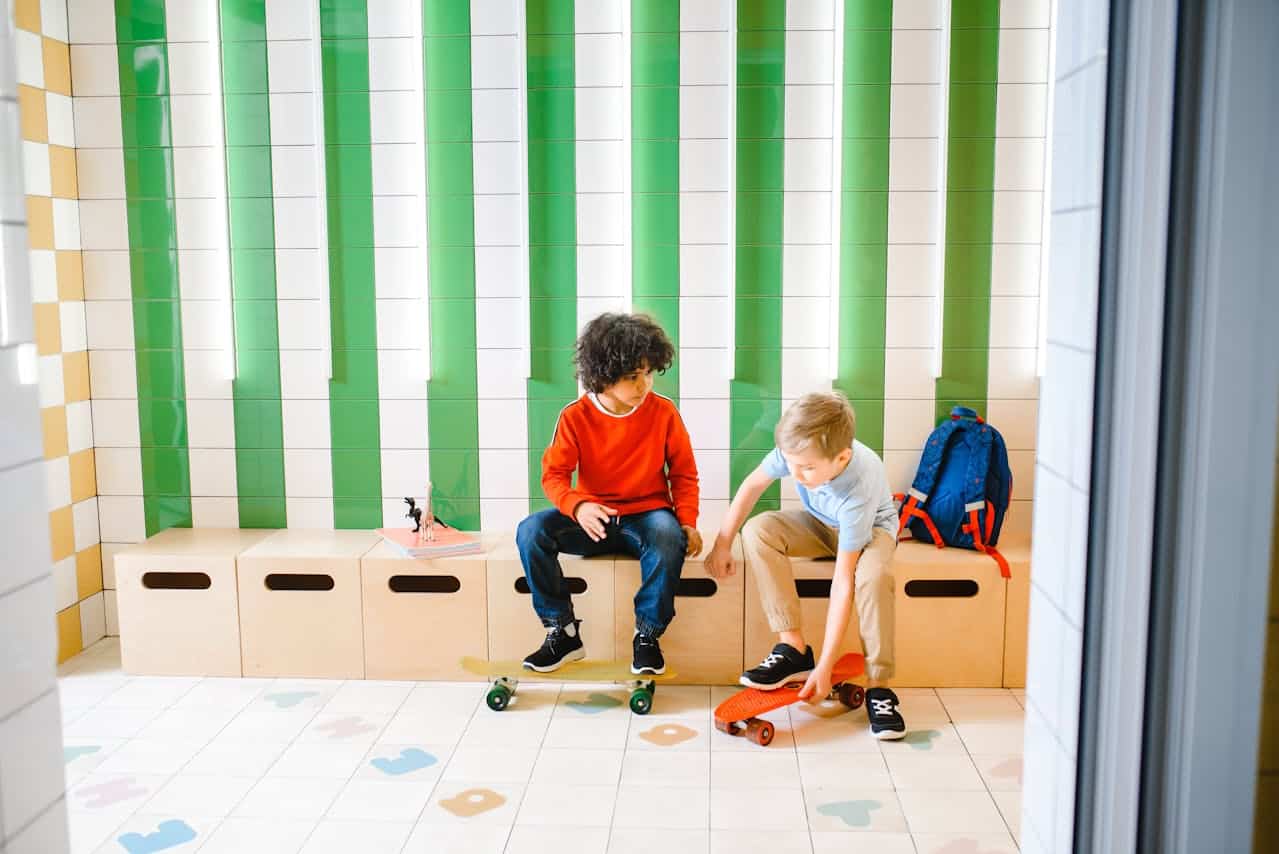
Your child bursts through the door, backpack sliding off one shoulder, shoes already half-kicked across the hallway. You smile and ask the question almost every parent asks:
“Fine.”
“What did you do?”
“Stuff.”
And just like that, the conversation is over.
If this feels painfully familiar, you’re not doing anything wrong. At Museo dei Bambini Lecce, we see versions of this moment every day — parents genuinely wanting to connect, and children struggling to compress an entire day of thoughts, emotions, and experiences into a single answer.
The problem isn’t that children don’t want to talk.
It’s that we’re often asking questions that are too broad for young minds to answer.
From parent–child conversations during hands-on play, science exploration, and quiet moments of reflection, we’ve learned that small shifts in how we ask questions can completely change what children share.
That’s why we use what we call The Better Questions Habit: a simple way of asking about a child’s day that opens up reflection, emotional awareness, and genuine connection — without turning the moment into an interrogation.
What Is The Better Questions Habit?
The Better Questions Habit isn’t about getting more information. It’s about asking questions that are answerable, human, and emotionally safe.
Instead of asking children to summarize their entire day, these questions help them:
- notice meaningful moments
- reflect on challenges without shame
- recognize kindness and effort
- reconnect with curiosity
- feel seen and understood
Below are the seven core questions at the heart of The Better Questions Habit, developed through our work with families at Museo dei Bambini Lecce.
What was your favorite part of today?
This small shift — from “How was school?” to “What was your favorite part?” — immediately changes the task. Your child no longer has to evaluate the entire day. They just have to choose one moment.
Over time, this trains children to notice positive experiences, even on difficult days. It gently builds gratitude and optimism without forcing either.
Why it works:
Choosing one concrete memory is far easier (and more enjoyable) than summarizing everything.
Try these follow-ups:
- What made it so good?
- Who was with you?
- How did it make you feel?
What was something you had trouble with, and how did you figure it out?
This question normalizes struggle as part of learning. Instead of focusing on what went wrong, it centers the process of figuring things out.
When children talk regularly about challenges they navigated, they begin to see difficulty as something interesting — not something to avoid or feel ashamed of.
Why it works:
The focus shifts from performance to problem-solving.
Try these follow-ups:
- What did that teach you?
- What might you try next time?
- Did anyone help you?
Who did something kind or brave today?
This question turns your child into an observer of the social world around them. It helps them notice kindness, courage, and care — especially when those things are quiet or small.
Over time, this builds empathy and social awareness.
Why it works:
Children don’t automatically notice emotional dynamics unless we help them learn how.
Try these follow-ups:
- What did they do that you noticed?
- How do you think that made others feel?
- Did it remind you of something you’ve done?
Who did you help today?
This question reinforces a powerful identity message: you are someone who contributes.
When children regularly reflect on how they help others, generosity becomes something they notice and value — not just something adults expect.
Why it works:
It shifts the focus from what they achieved to what they gave.
Try these follow-ups:
- How do you think that helped them?
- How did helping feel?
- Is there someone you want to help tomorrow?
What was something cool or interesting you learned today?
This question prioritizes curiosity over grades or outcomes. Learning becomes something expansive — a new idea, a question, a surprise, or something they noticed in the world.
Why it works:
It removes performance pressure and brings genuine wonder back into the conversation.
Try these follow-ups:
- Can you show me or tell me more?
- Why do you think that happened?
- What does it make you wonder?
What’s something new you want to try?
This question looks forward instead of backward. It encourages courage, creativity, and healthy risk-taking, while giving you insight into what excites or intimidates your child.
Even imagining a new action is a meaningful first step.
Why it works:
Visualization often comes before confidence.
Try these follow-ups:
- What part feels exciting?
- What part feels tricky?
- When would you like to try it?
What’s something you might do differently tomorrow?
This question invites reflection without blame. It keeps the focus on possibility, not correction, and gives children a sense of agency over their choices.
The word might matters. It keeps the conversation open and exploratory.
Why it works:
There’s no pressure to promise change — just space to think.
Try these follow-ups:
- What made that hard in the moment?
- What could help tomorrow?
- Would you like help, or would you like to try on your own?
Making The Better Questions Habit Part of Everyday Life
You don’t need to ask all seven questions every day. At Museo dei Bambini Lecce, we encourage families to think of The Better Questions Habit as a mindset, not a checklist.
Some days you’ll have rich, winding conversations.
Other days you’ll still get “I don’t know.”
Both are normal.
The goal isn’t perfect conversations — it’s connection. These questions are tools, not tests. Used consistently, they help children slow down, reflect on their inner world, care about others, and trust their own ability to learn and grow.
About this approach
The Better Questions Habit was developed through the work of Museo dei Bambini Lecce, a science-based children’s museum in southern Italy dedicated to curiosity, emotional intelligence, and real-world learning through play.